
There is a lot of noise around how AI is changing commercial property management, and much of it comes from vendors with something to sell.
This article is meant to cut through that. AI is genuinely changing certain parts of how commercial buildings are operated, but it is not replacing property managers, and it is not a magic fix for a poorly run property.
The goal here is to walk through where the technology is actually useful, where human judgment still carries the most weight, and how a small or mid sized property owner might reasonably think about adoption.
What AI Actually Means in This Context
When people talk about AI in property management, they are usually referring to a mix of tools: machine learning models that detect patterns in operational data, computer vision used in security or inspection contexts, natural language processing that powers chatbots and document review, and predictive analytics applied to maintenance, energy use, or leasing. None of these technologies think or reason the way a person does.
They identify patterns in data and flag things for a human to review or act on. That distinction matters, because it shapes what these tools can and cannot responsibly be trusted to do. Also read How to Reduce Commercial Property Operating Expenses Without Cutting Corners.
Where AI Can Genuinely Help Property Managers
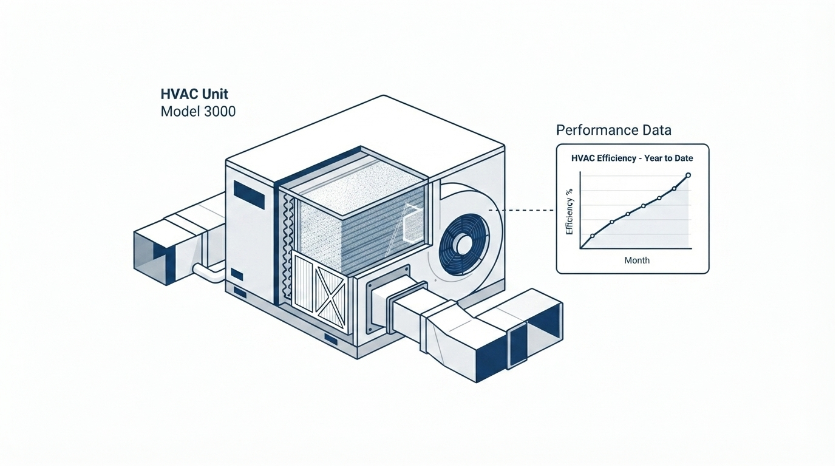
Predictive maintenance. Sensors and monitoring systems can track equipment performance over time and flag unusual patterns, such as an HVAC unit running less efficiently than its historical baseline. This can give a maintenance team a head start before a full failure occurs.
Energy management. AI driven building automation systems can adjust heating, cooling, and lighting based on real time occupancy and usage patterns, which can meaningfully reduce utility costs in buildings with variable occupancy.
Tenant communication and maintenance triage. Natural language tools can help route and prioritize incoming maintenance requests, flagging urgent issues like a water leak ahead of routine items like a squeaky door, so the right request reaches the right person faster.
Lease data extraction and administration. Reviewing dozens or hundreds of leases for key dates, escalation clauses, and renewal options is tedious and error prone work. AI tools that extract this data can reduce the manual burden, though the extracted data still benefits from a human review pass.
Financial reporting and expense analysis. Pattern recognition tools can flag unusual expense spikes or vendor billing anomalies that might otherwise go unnoticed in a large operating statement.
Occupancy and vacancy analysis. Predictive models can analyze leasing velocity, market absorption, and tenant renewal patterns to help forecast vacancy risk further in advance than a purely manual review might catch.
Vendor management and inspections. Some platforms use computer vision to assist with remote property inspections or to flag visible maintenance issues from photos or video, supplementing rather than replacing physical walkthroughs.
Where Human Property Managers Still Matter
None of the applications above eliminate the need for experienced judgment. Negotiating a lease renewal, handling a tenant dispute, deciding how to respond to a difficult vendor, or making a capital expenditure decision under budget pressure all require context, relationship history, and judgment that current AI tools are not equipped to replace. A predictive maintenance alert tells you a system is behaving unusually. It does not tell you whether the fix is worth the cost right now, whether the tenant relationship can tolerate a temporary disruption, or how that decision fits into a broader capital plan for the building. That kind of judgment remains squarely a human responsibility, and it is likely to stay that way for the foreseeable future.
Risks of Using AI in Commercial Property Management
Adopting these tools is not without tradeoffs, and a balanced view has to include them honestly.
Data quality. A predictive model is only as good as the data feeding it. Poorly maintained sensors or incomplete historical records can produce misleading outputs.
Privacy and cybersecurity. Property systems increasingly touch tenant data, access control systems, and building automation networks, all of which expand the potential attack surface if not properly secured.
Incorrect predictions. AI predictions are not guarantees. A flagged anomaly might be a false alarm, and a system that looks fine on paper can still fail unexpectedly. Treating AI output as certainty rather than a signal worth investigating is a real risk.
Vendor lock in and implementation costs. Many building automation and AI platforms require meaningful upfront investment and ongoing subscription costs, and switching providers later can be disruptive.
Staff training and overreliance on automation. A team that has not been properly trained on a new system, or that becomes overly dependent on automated alerts without maintaining basic operational awareness, can end up worse off than before adoption.
Applications and Considerations at a Glance
| AI Application | Primary Benefit | Key Consideration |
| Predictive Maintenance | Earlier detection of equipment issues | Requires reliable sensor data and human follow up |
| Energy Management | Lower utility costs in variable occupancy buildings | Upfront system cost, integration complexity |
| Maintenance Triage | Faster routing of urgent tenant requests | Still needs human oversight for edge cases |
| Lease Data Extraction | Faster review of large lease portfolios | Extracted data should be verified, not assumed correct |
| Financial Anomaly Detection | Flags unusual expenses or billing issues | False positives require investigation, not automatic action |
Hypothetical Example: Catching an HVAC Problem Early
Consider a hypothetical mid sized office building with a building automation system tracking HVAC performance. Over several weeks, the system detects that one rooftop unit is drawing more energy than its historical baseline to maintain the same temperature, a pattern consistent with a failing component. The system flags this anomaly for the property manager. The property manager schedules a technician to investigate rather than waiting for a full breakdown. The technician identifies a failing motor and replaces it during a routine service visit, avoiding an emergency repair and a potential loss of climate control during business hours. This is a realistic illustration of how the technology is generally expected to work, not a guarantee of the outcome in every situation. AI flagged a pattern. A person made the decision and took the action.
Should a Commercial Property Owner Adopt AI? A Practical Framework

Not every property needs the same level of technology investment. When evaluating an AI tool, I would look at the actual expected cost savings and operational benefit rather than the number of features a vendor demonstrates. A few questions worth working through:
- Property size and portfolio scope. A single small building may not justify the cost of a full building automation platform, while a multi building portfolio often sees a faster return on that same investment.
- Data availability. If your building already has metering, sensors, or a digital maintenance log, you are closer to being ready for predictive tools than a building with mostly paper records.
- Maintenance complexity. Buildings with complex mechanical systems tend to see more value from predictive maintenance than simpler, lower complexity properties.
- Energy costs. High utility costs relative to overall operating expenses make energy management tools more likely to pay for themselves.
- Existing technology and budget. Bolting AI tools onto an already fragmented, outdated technology stack often costs more and delivers less than starting with a clean, well integrated system.
- Expected return on investment. A reasonable rule of thumb is to require a clear, quantifiable expected benefit, whether in reduced repair costs, energy savings, or staff time, before committing to a new platform.
The 2026 Technology Environment
Proptech adoption has continued to expand through 2026, particularly in building automation, energy management, and lease administration tools, though adoption levels and outcomes vary significantly by portfolio size, property type, and existing infrastructure. Rather than citing a specific adoption percentage, which shifts too quickly to responsibly quote here, it is more useful to note that the direction of travel is toward more data driven operations, applied selectively rather than universally, with the most consistent gains showing up in maintenance and energy use rather than in tenant facing or leasing decisions.
For further reading on responsible AI use in operational contexts, the National Institute of Standards and Technology’s AI Risk Management Framework offers a useful, government backed reference point, and the Urban Land Institute’s research and insights frequently covers proptech and building technology trends from a commercial real estate specific perspective.
The Bottom Line
How AI is changing commercial property management is really a story about augmentation, not replacement. The tools that are delivering real value right now tend to be narrow and operational: predictive maintenance, energy management, and data heavy tasks like lease review. The judgment calls that define good property management still sit with the people running the building.
If you are considering adopting AI tools, start with the operational pain point that costs you the most time or money today, and evaluate a tool against that specific problem rather than against a long feature list.
FAQs
Is AI replacing commercial property managers? No. AI tools are generally used to support tasks like predictive maintenance, data analysis, and communication triage, but decisions involving tenant relationships, capital planning, and judgment calls remain the responsibility of a human property manager.
What is the most practical AI application for a small commercial property owner? Predictive maintenance and basic energy management tools tend to offer the clearest, most measurable return for smaller owners, since they directly address recurring operating costs.
Are AI predictions in property management reliable? AI predictions are signals based on data patterns, not guarantees. They can be genuinely useful for flagging issues early, but they should be investigated and confirmed by a person rather than acted on automatically.
How much does it cost to add AI tools to a commercial property? Costs vary widely depending on the platform, the size of the property, and whether new sensors or hardware are required, which makes a direct cost benefit comparison for your specific building essential before committing.
What are the biggest risks of using AI in property management? Common risks include poor data quality leading to misleading outputs, cybersecurity exposure from connected systems, and overreliance on automation without adequate human oversight.
Does AI help with tenant communication? Natural language tools can help route and prioritize incoming tenant requests and answer routine questions, which can speed up response times, though complex or sensitive tenant issues still generally benefit from a direct human response.
How is AI changing commercial property management in 2026? AI is increasingly used for predictive maintenance, energy optimization, lease data extraction, and financial anomaly detection, while human judgment remains central to tenant relationships, negotiations, and capital decisions.
Leave a Reply