
If you own commercial real estate, you have likely wondered what commercial property insurance requirements actually apply to a landlord, and whether your current coverage is enough. It is a fair question with no single, universal answer.
Requirements shift depending on your property type, lease structure, lender, location, and the activities your tenants conduct inside your building.
This guide is written for property owners who want to understand what they are buying and why it matters, not from the perspective of an insurer trying to sell a policy.
Why Commercial Landlords Need Insurance in the First Place
A commercial building represents a significant financial asset, and it carries real exposure. Fire, storm damage, a slip and fall in a common area, a burst pipe that floods a tenant’s unit: any of these can trigger costs that reach into six or seven figures once you count repairs, legal claims, and lost rent. Insurance exists to transfer that risk away from your personal balance sheet.
Beyond the financial logic, most commercial mortgage lenders require proof of adequate coverage as a condition of the loan. Many leases also specify minimum insurance obligations for both the landlord and the tenant. In other words, insurance for a commercial landlord is often not fully optional even before you consider the practical risk.
The Core Coverage Types Landlords Should Understand
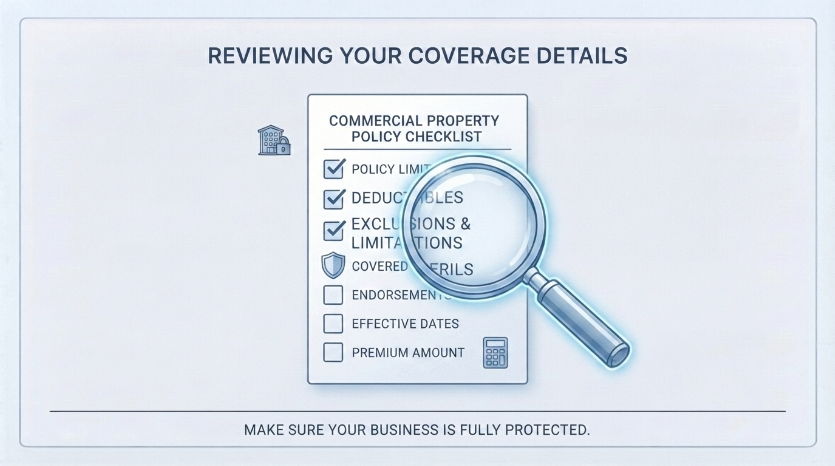
Commercial Property Insurance
This is the foundation. It generally covers physical damage to the building itself, caused by events like fire, windstorm, vandalism, or certain types of water damage, subject to the policy’s specific exclusions.
General Liability Insurance
This protects you if someone is injured on the property, or if the property causes damage to someone else’s belongings, and you are found responsible. A visitor who slips on an icy sidewalk in front of your building is a classic example of the kind of claim this coverage is meant to address.
Business Interruption or Loss of Rental Income Coverage
If a covered event makes a unit uninhabitable, this coverage can help replace the rent you would have collected while repairs are underway. Many owners underestimate how important this is until they actually experience an extended vacancy caused by damage.
Commercial Umbrella Insurance
Umbrella coverage sits on top of your general liability and other primary policies, adding an extra layer of protection once those underlying limits are exhausted. For owners with significant assets to protect, this is often a relatively low cost way to add meaningful protection.
Equipment Breakdown Coverage
HVAC systems, boilers, and electrical equipment fail. This coverage is designed to help with the repair or replacement cost when mechanical or electrical equipment breaks down, which standard property policies often exclude or limit.
Flood and Earthquake Coverage
Standard commercial property policies typically exclude flood and earthquake damage. If your property sits in a flood zone or an area with seismic risk, you may need to purchase these coverages separately, and in some cases a lender will require it.
Environmental or Pollution Coverage
Properties with a history of industrial use, underground storage tanks, or certain tenant activities can carry environmental exposure that a standard policy does not address. This is worth a direct conversation with your broker if your property has any of these characteristics.
Builders Risk Coverage
If you are renovating or constructing on the property, a builders risk policy is designed to cover the structure while work is in progress, a period when standard property coverage may not apply in the same way.
Ordinance or Law Coverage
Older buildings that are damaged may need to be rebuilt to current building codes, which can cost more than simply restoring what was there. Ordinance or law coverage is meant to help bridge that gap.
Replacement Cost Versus Actual Cash Value
This distinction matters more than many owners realize. Replacement cost coverage is generally intended to pay what it would cost to rebuild with similar materials at today’s prices. Actual cash value factors in depreciation, meaning the payout could be meaningfully lower. When reviewing a policy, I would always confirm which basis applies, because the difference after a major loss can be substantial.
Landlord Coverage Versus Tenant Coverage
A landlord’s policy is generally intended to protect the building and the landlord’s own liability. It is not designed to cover a tenant’s business personal property, inventory, or business interruption. That is why most commercial leases require tenants to carry their own commercial general liability and property insurance, often naming the landlord as an additional insured. When reviewing a lease, one practical way I would approach this is to confirm the tenant insurance requirements are spelled out clearly, including minimum limits and proof of coverage requirements.
Deductibles, Exclusions, Policy Limits, and Endorsements
A deductible is the amount you pay out of pocket before coverage responds. Higher deductibles usually mean lower premiums, but they also mean more exposure if a loss occurs. Exclusions are the specific situations or causes of loss a policy will not cover, and every policy has them.
Policy limits cap how much the insurer will pay for a given type of loss. Endorsements are modifications that add, remove, or adjust coverage from the base policy. Reading these sections carefully, rather than assuming a policy covers everything, is one of the most valuable habits a commercial owner can build.
Comparison of Common Commercial Landlord Coverage Types
| Coverage Type | What It Generally Addresses | Typically Required By |
| Commercial Property | Physical damage to the building | Lender, prudent ownership |
| General Liability | Third party injury or property damage claims | Lender, lease terms |
| Loss of Rental Income | Lost rent after a covered loss | Prudent ownership |
| Umbrella | Extra liability limits above primary policies | Larger portfolios, higher risk properties |
| Flood or Earthquake | Damage from these specific perils | Lender, if in a designated zone |
| Equipment Breakdown | Mechanical and electrical system failures | Prudent ownership |
Hypothetical Example: How a Claim Might Play Out
Consider a hypothetical scenario. A small retail strip center suffers a kitchen fire in one of its tenant spaces. The fire damages the unit’s interior and causes smoke damage to two neighboring units. The building’s commercial property policy would generally be expected to respond to the structural damage, while loss of rental income coverage could help offset the rent lost from the affected units during repairs. The tenant’s own policy would typically be responsible for their equipment, inventory, and business interruption. If a customer had been injured during the incident, general liability coverage would come into play for that claim. This is a simplified illustration, and actual outcomes always depend on the specific policy language, the cause of loss, and applicable exclusions.
Commercial Property Insurance Checklist for Landlords
- Confirm whether your property policy uses replacement cost or actual cash value
- Verify flood and earthquake exposure and whether separate coverage is needed
- Confirm your lender’s specific insurance requirements, if you carry a mortgage
- Review your general liability limits against your property’s foot traffic and risk profile
- Check whether loss of rental income coverage is included or needs to be added
- Confirm tenant insurance requirements are documented in every lease
- Ask whether your policy has coinsurance requirements that could reduce a payout
- Review exclusions carefully, especially for water damage and mold
- Reassess coverage limits after any major renovation or property value increase
- Request certificates of insurance from tenants annually, not just at lease signing
Where Requirements Vary

Exact insurance requirements are not uniform. They vary by state and local regulation, by mortgage lender, by lease terms negotiated between landlord and tenant, by the specific insurance carrier and policy, and by the nature of the tenant’s business.
A restaurant tenant carries different risk than a professional office tenant, and a property in a coastal flood zone carries different exposure than one in an inland market. No single article can substitute for a conversation with a licensed insurance professional who understands your specific property and jurisdiction, and this guide should be read as general education rather than a jurisdiction specific requirement list.
For general background on how property and casualty insurance works, the Insurance Information Institute’s commercial property insurance guidance is a useful neutral resource, and the National Association of Insurance Commissioners publishes consumer facing material on how state insurance regulation functions. The U.S. Small Business Administration’s guidance on business insurance is also a solid starting point for owners who operate a business alongside their property holdings.
The Bottom Line
Commercial property insurance requirements for landlords are rarely one size fits all, and treating them that way is how coverage gaps happen.
The more useful approach is to understand what each type of coverage is actually designed to do, confirm what your lender and leases require, and revisit that picture regularly as your property and tenant mix change.
If you manage a commercial property and have not reviewed your coverage against your current rent roll and lease terms in the last year, that review is a reasonable next step before your next renewal date arrives.
FAQs
Is commercial property insurance legally required for landlords? It depends on the jurisdiction and the property. In many cases it is not a blanket legal mandate, but it is almost always required by mortgage lenders and frequently referenced in lease agreements, which makes it a practical necessity even where it is not strictly a legal one.
What is the difference between general liability and commercial property insurance? General liability addresses third party injury or property damage claims against the landlord. Commercial property insurance addresses physical damage to the building itself. They serve different purposes and most landlords carry both.
Do commercial landlords need flood insurance? Not automatically. It generally depends on whether the property sits in a designated flood zone, since standard commercial property policies typically exclude flood damage. A lender may require it if the property is in a mapped flood zone.
How much commercial property insurance does a landlord need? There is no single number. It depends on the rebuild cost of the structure, the property’s location and risk profile, lender requirements, and the landlord’s own risk tolerance, which is why replacement cost estimates are usually reviewed periodically.
Are tenants required to carry their own insurance? Most commercial leases require tenants to carry general liability and property insurance for their own business operations, often naming the landlord as an additional insured, but the specific requirement depends entirely on what the lease says.
What is not covered by a typical commercial landlord policy? Tenant business personal property, tenant business interruption, and perils like flood or earthquake are commonly excluded from a standard landlord policy unless specifically added.
How often should a landlord review their insurance coverage? Reviewing coverage annually, and after any major renovation, tenant change, or property value shift, is a reasonable practice for keeping commercial property insurance requirements aligned with the actual risk on the property.
Leave a Reply